

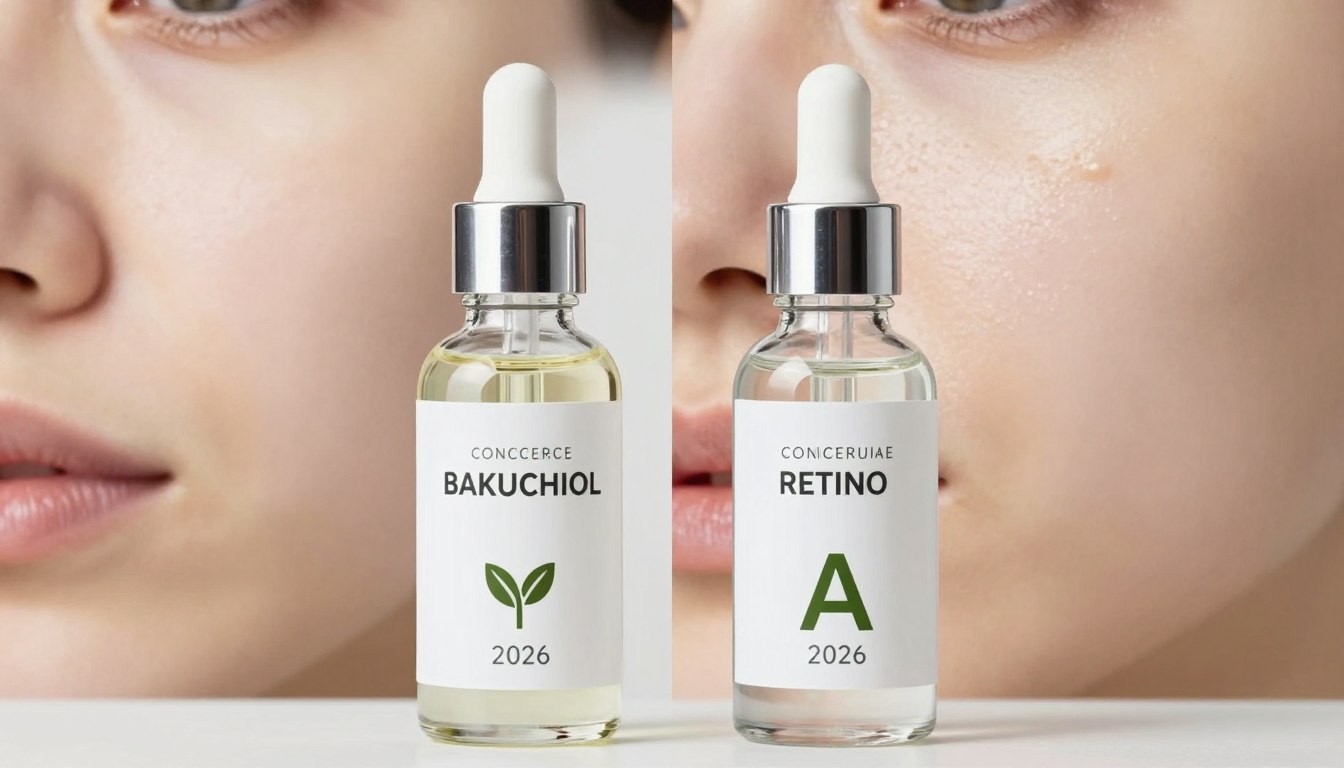
The skincare world continues to debate the merits of two powerful anti-aging ingredients: traditional retinol and plant-based bakuchiol. As we move into 2026, both ingredients have evolved with advanced formulations and research backing their efficacy. If you’re standing in the skincare aisle (or scrolling through endless options online) wondering which ingredient deserves a spot in your routine, you’re not alone.
This comprehensive guide cuts through the marketing hype to deliver evidence-based comparisons between bakuchiol vs retinol in 2026. We’ll explore how these ingredients work, their benefits, potential side effects, and which skin types they serve best. Most importantly, we’ll recommend specific products that deliver results, helping you make an informed decision for your unique skin concerns.
Understanding Bakuchiol and Retinol: The Fundamentals
What is Bakuchiol?
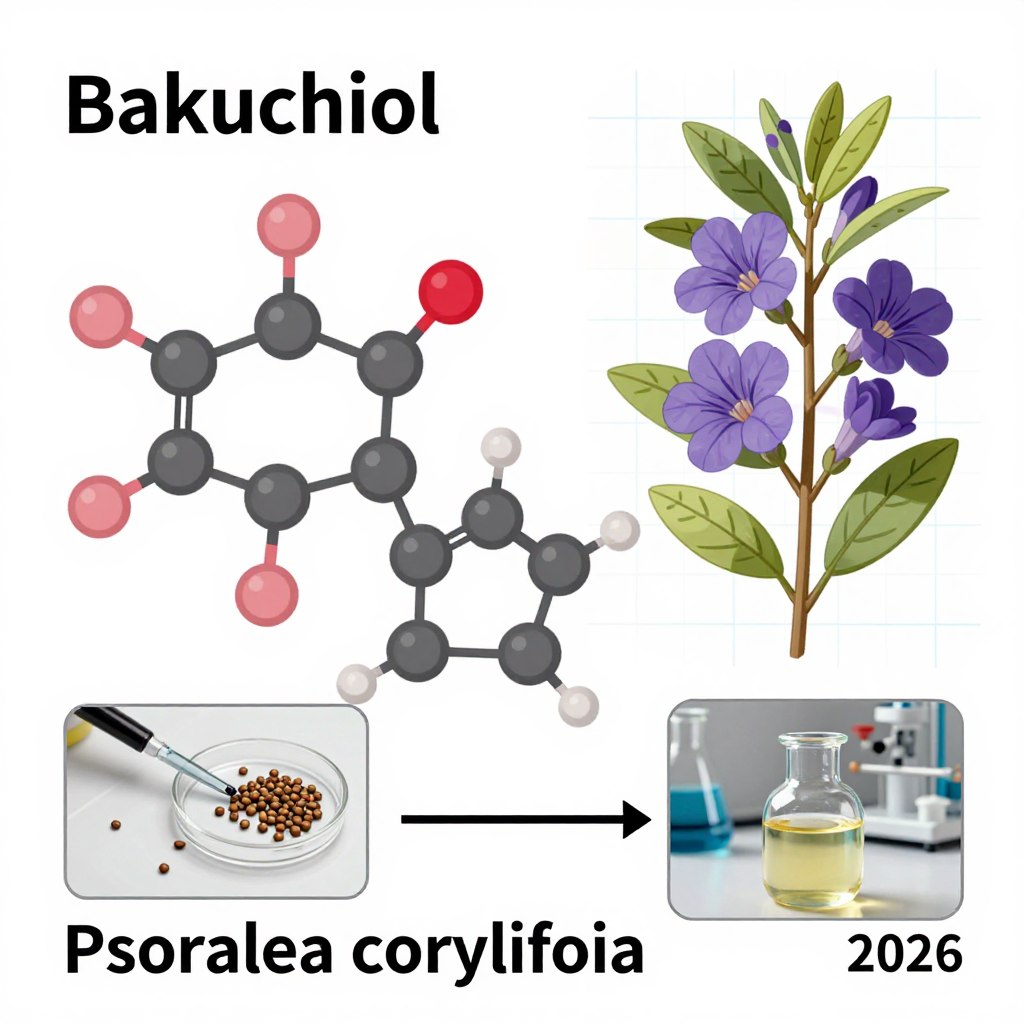
Bakuchiol (pronounced buh-koo-chee-ol) is a natural compound derived from the seeds and leaves of the Psoralea corylifolia plant, commonly known as babchi. This plant has been used in traditional Ayurvedic and Chinese medicine for centuries, but its skincare benefits have only recently gained mainstream attention.
Unlike retinol, bakuchiol has a completely different molecular structure but remarkably produces similar effects on the skin. It works by stimulating the genes that regulate cell turnover and collagen production without binding to retinoid receptors. This unique mechanism explains why bakuchiol can deliver comparable results without the irritation commonly associated with retinoids.
In 2026 formulations, bakuchiol is often combined with complementary ingredients like niacinamide, peptides, and antioxidants to enhance its effectiveness while maintaining its gentle profile.
What is Retinol?
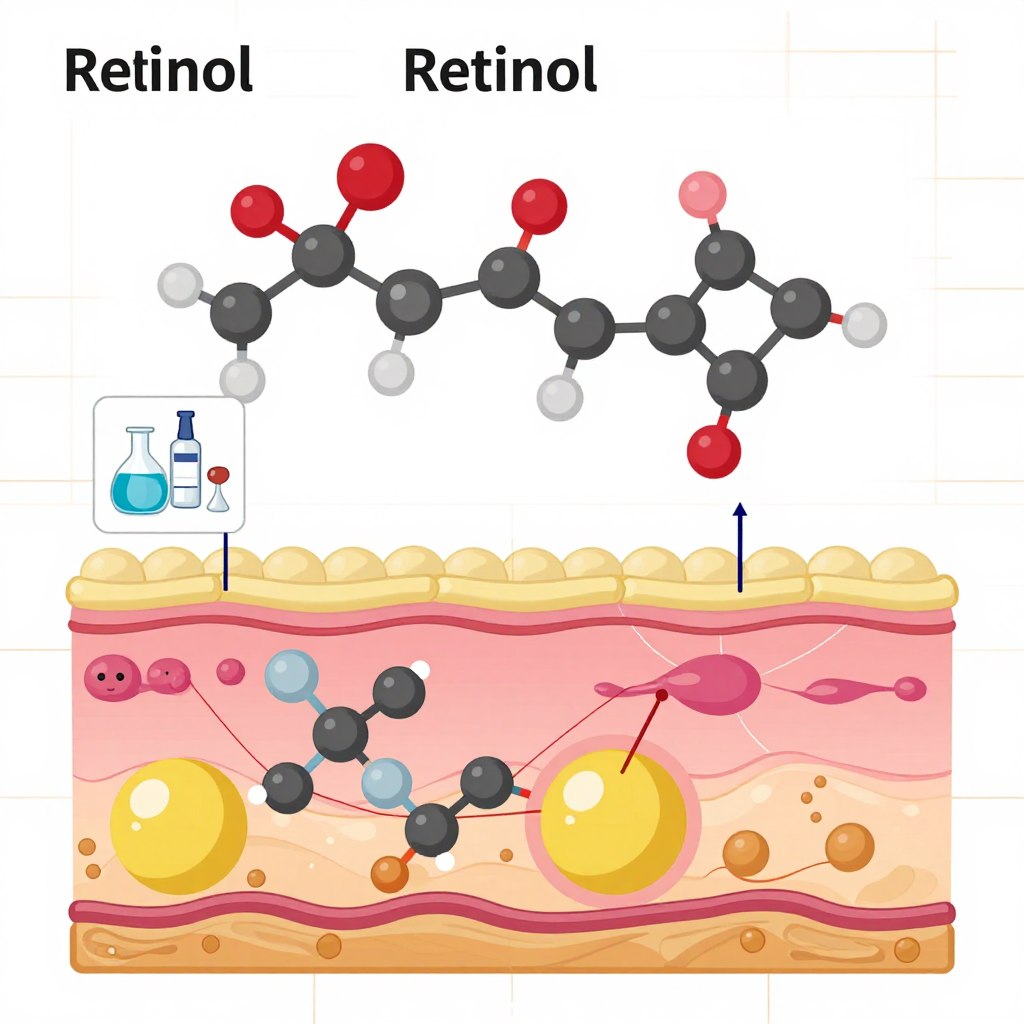
Retinol is a derivative of vitamin A and belongs to the broader family of retinoids. When applied to the skin, retinol converts into retinoic acid, the biologically active form that produces visible results. This conversion process involves multiple steps, which explains why retinol typically works more gradually than prescription-strength retinoids but also tends to cause less irritation.
The mechanism of action for retinol is well-documented: it binds to specific receptors in skin cells, directly influencing gene expression to accelerate cell turnover, boost collagen production, and regulate oil production. This comprehensive approach explains why retinol has remained the gold standard for anti-aging despite the emergence of numerous alternatives.
Modern 2026 retinol formulations have significantly improved from earlier versions, with advanced delivery systems, time-release technologies, and buffering ingredients that minimize irritation while maximizing results.
Key Benefits: How Bakuchiol and Retinol Transform Your Skin
Bakuchiol Benefits
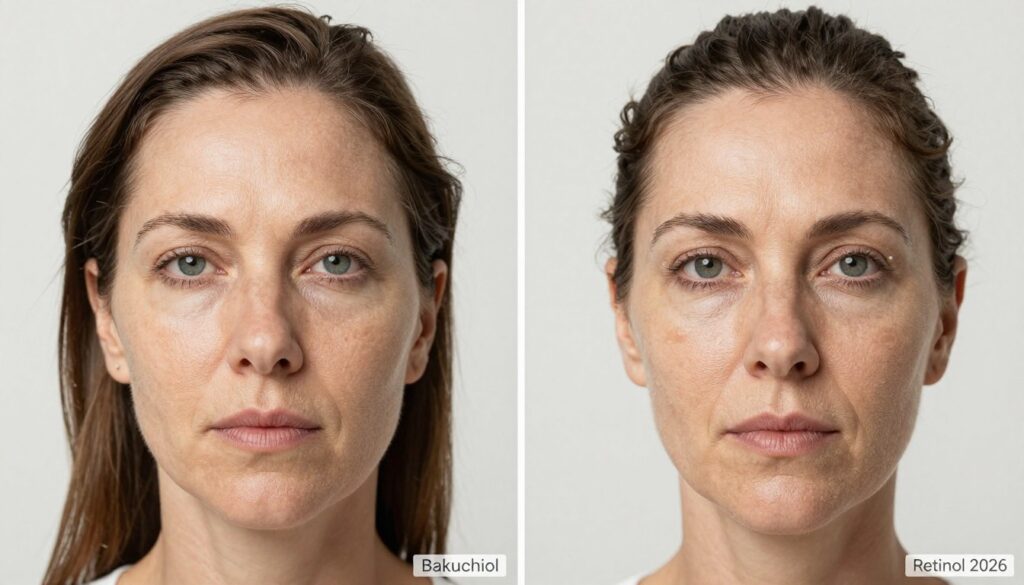
- Reduces Fine Lines and Wrinkles: Clinical studies show bakuchiol stimulates collagen production, helping to diminish the appearance of fine lines and wrinkles over time.
- Improves Skin Firmness: Regular use enhances skin elasticity and firmness by supporting the skin’s structural proteins.
- Evens Skin Tone: Bakuchiol helps fade dark spots and hyperpigmentation by regulating melanin production and accelerating cell turnover.
- Soothes Inflammation: Unlike retinol, bakuchiol has anti-inflammatory properties that can actually calm irritated skin while delivering anti-aging benefits.
- Antioxidant Protection: Bakuchiol provides antioxidant benefits, helping to neutralize free radicals and prevent environmental damage.
Retinol Benefits
- Powerful Wrinkle Reduction: Decades of research confirm retinol’s ability to significantly reduce the appearance of both fine lines and deeper wrinkles.
- Accelerated Cell Turnover: Retinol speeds up the skin’s natural exfoliation process, revealing fresher, brighter skin more quickly than most alternatives.
- Acne Treatment: Beyond anti-aging, retinol effectively treats and prevents acne by regulating oil production and preventing pore blockage.
- Improved Skin Texture: Regular use refines rough texture, minimizes pore appearance, and creates a smoother overall complexion.
- Fades Hyperpigmentation: Retinol effectively addresses sun damage, age spots, and post-inflammatory hyperpigmentation through its exfoliating and cell-regulating properties.
Side Effects and Tolerability: What to Expect
Bakuchiol Side Effects
One of bakuchiol’s most significant advantages is its gentle nature. Clinical studies consistently show minimal adverse reactions, even among those with sensitive skin. In 2026 formulations, the refinement of extraction and formulation techniques has further improved its tolerability profile.
Bakuchiol Tolerability
- Generally well-tolerated by all skin types, including sensitive skin
- No significant “adjustment period” or purging phase
- Can be used morning and night without increased sun sensitivity
- Compatible with most other active ingredients
- Suitable for use during pregnancy (though always consult your doctor)
While allergic reactions are possible with any ingredient, they’re extremely rare with bakuchiol. If you have known sensitivities to plants in the Fabaceae family, a patch test is recommended before full application.
Retinol Side Effects
Retinol’s powerful effects come with potential side effects, particularly during the initial adjustment period. While 2026 formulations have significantly improved tolerability through advanced delivery systems, some users may still experience temporary reactions as their skin adapts.
Retinol Adjustment Period
- Temporary dryness, flaking, and redness during first 2-4 weeks
- Increased sun sensitivity requiring diligent SPF use
- Potential “purging” phase where acne may temporarily worsen
- Not recommended during pregnancy or breastfeeding
- May require careful product pairing to avoid irritation
Most retinol side effects can be managed with proper introduction: starting with lower concentrations (0.25-0.3%), applying only 2-3 times weekly, and gradually increasing frequency as tolerance builds. Using moisturizing ingredients like hyaluronic acid, ceramides, and niacinamide alongside retinol can significantly reduce irritation.
Which Ingredient Is Right for Your Skin Type?
Skin Type/Concern | Bakuchiol Suitability | Retinol Suitability | Recommendation |
| Sensitive Skin | Excellent – minimal irritation risk | Poor – high risk of irritation | Choose bakuchiol for gentler results |
| Dry Skin | Very Good – non-drying | Moderate – can exacerbate dryness | Bakuchiol or buffered retinol formulas |
| Oily/Acne-Prone Skin | Good – helps balance oil | Excellent – regulates oil and treats acne | Retinol for more dramatic improvement |
| Combination Skin | Very Good – balances without irritation | Good – effective but requires careful application | Either works well; consider concerns beyond skin type |
| Mature Skin (Deep Wrinkles) | Moderate – gradual improvement | Excellent – more dramatic results | Start with retinol if tolerated |
| Hyperpigmentation | Good – gradual fading | Very Good – faster results | Retinol for faster results, bakuchiol for sensitive skin |
| Rosacea-Prone Skin | Very Good – anti-inflammatory properties | Poor – can trigger flares | Choose bakuchiol |
| Pregnancy/Breastfeeding | Generally considered safe (consult doctor) | Not recommended | Bakuchiol with physician approval |
Bakuchiol vs Retinol 2026: Feature Comparison
Feature | Bakuchiol | Retinol |
| Source/Type | Plant-derived (Psoralea corylifolia) | Vitamin A derivative (synthetic) |
| Primary Mechanism | Gene regulation without retinoid receptor binding | Binds to retinoid receptors after converting to retinoic acid |
| Key Benefits | Anti-aging, improved texture, even tone, antioxidant protection | Anti-aging, acne treatment, hyperpigmentation, texture refinement |
| Common Side Effects | Minimal to none | Dryness, redness, peeling, purging (temporary) |
| Sun Sensitivity | No increased photosensitivity | Increases sun sensitivity |
| Best For | Sensitive skin, beginners, pregnancy (with doctor approval) | Resilient skin, advanced concerns, acne-prone skin |
| Time to See Results | 4-12 weeks | 4-12 weeks (after adjustment period) |
| Application Time | Morning or night | Night only |
| Price Range (2026) | $20-$85 | $15-$150 |
Top Bakuchiol Products for 2026
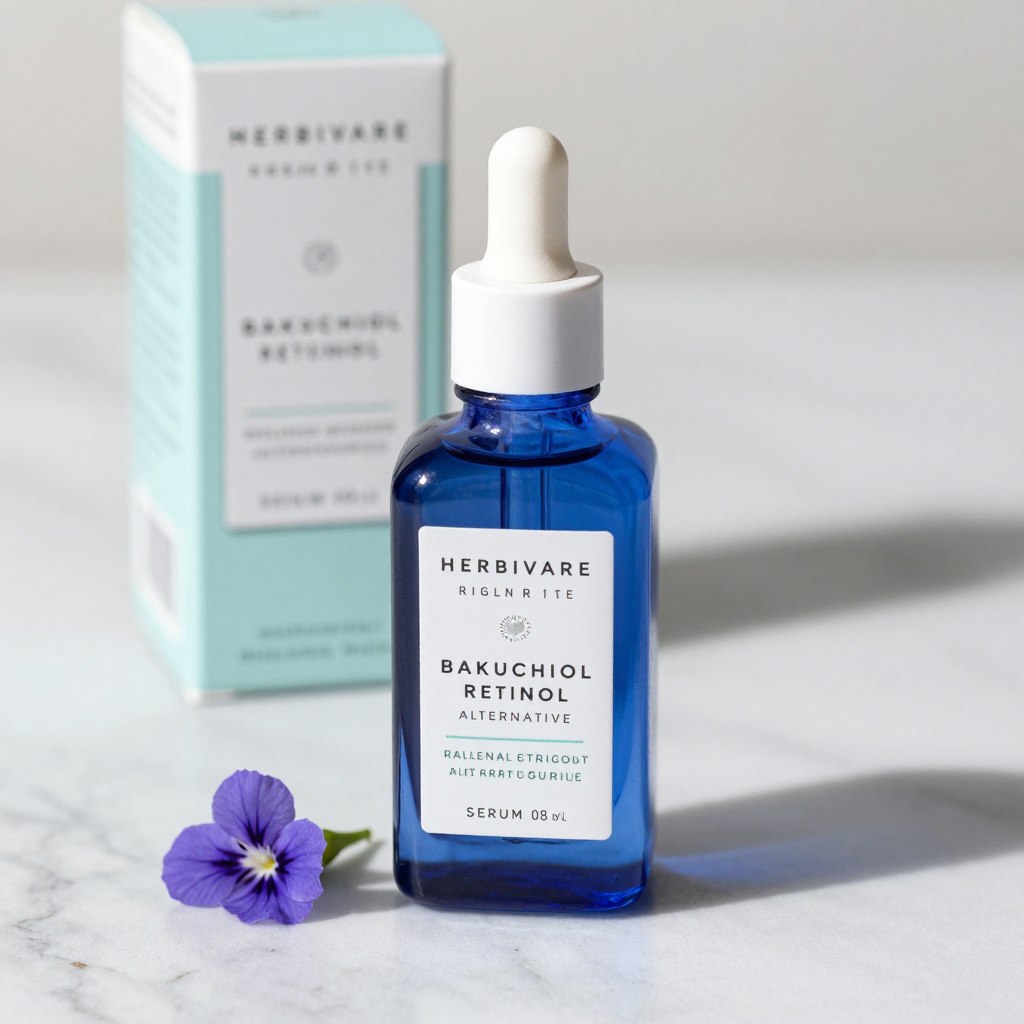
Herbivore Bakuchiol Retinol Alternative Serum
Herbivore Bakuchiol Retinol Alternative Serum
This lightweight, oil-based serum combines 1% bakuchiol with polyhydroxy acids for gentle exfoliation and tremella mushroom for hydration. The 2026 formula has been enhanced with additional antioxidants for improved environmental protection.
Specifications:
- Concentration: 1% bakuchiol
- Size: 30ml
- Formulation: Oil-based serum
- Additional Actives: PHAs, tremella mushroom extract
- Fragrance: Natural, minimal
Pros
- Gentle enough for sensitive skin
- Beautiful texture that absorbs well
- Visible improvement in skin texture within 4 weeks
- Sustainable packaging
- No artificial fragrance
Cons
- Higher price point
- Oil base may not suit very oily skin
- Requires consistent use for results
- Glass packaging not travel-friendly
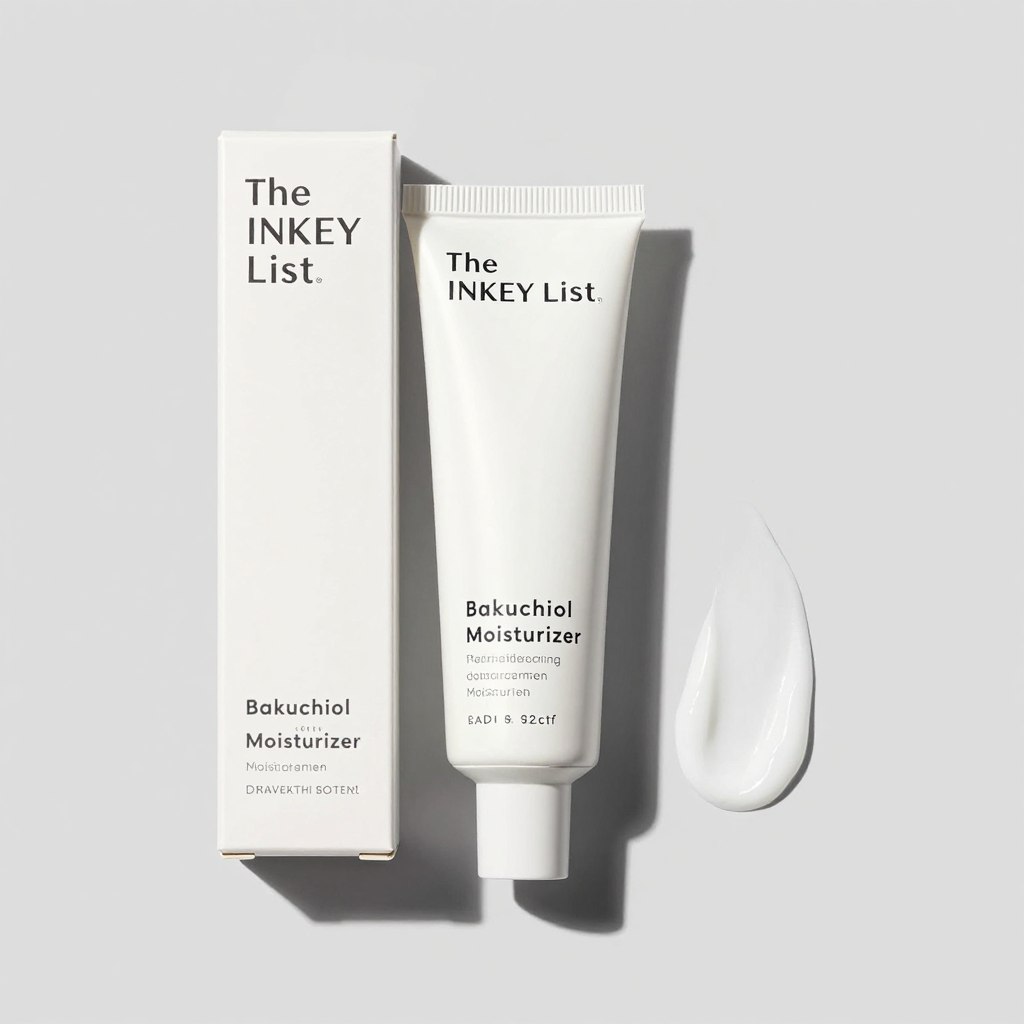
The INKEY List Bakuchiol Moisturizer
This budget-friendly moisturizer combines 1% bakuchiol with squalane and sacha inchi oil for hydration and barrier support. The 2026 formulation now includes ceramides for enhanced moisture retention and improved texture.
Specifications:
- Concentration: 1% bakuchiol
- Size: 50ml
- Formulation: Lightweight cream
- Additional Actives: Squalane, sacha inchi oil, ceramides
- Fragrance: Fragrance-free
Pros
- Exceptional value for money
- Fragrance-free formula ideal for sensitive skin
- Hydrating without feeling heavy
- Works well under makeup
- Visible improvement in skin texture within 6-8 weeks
Cons
- Basic packaging
- May not be hydrating enough for very dry skin
- Results more gradual than higher-priced options
- Limited additional anti-aging ingredients
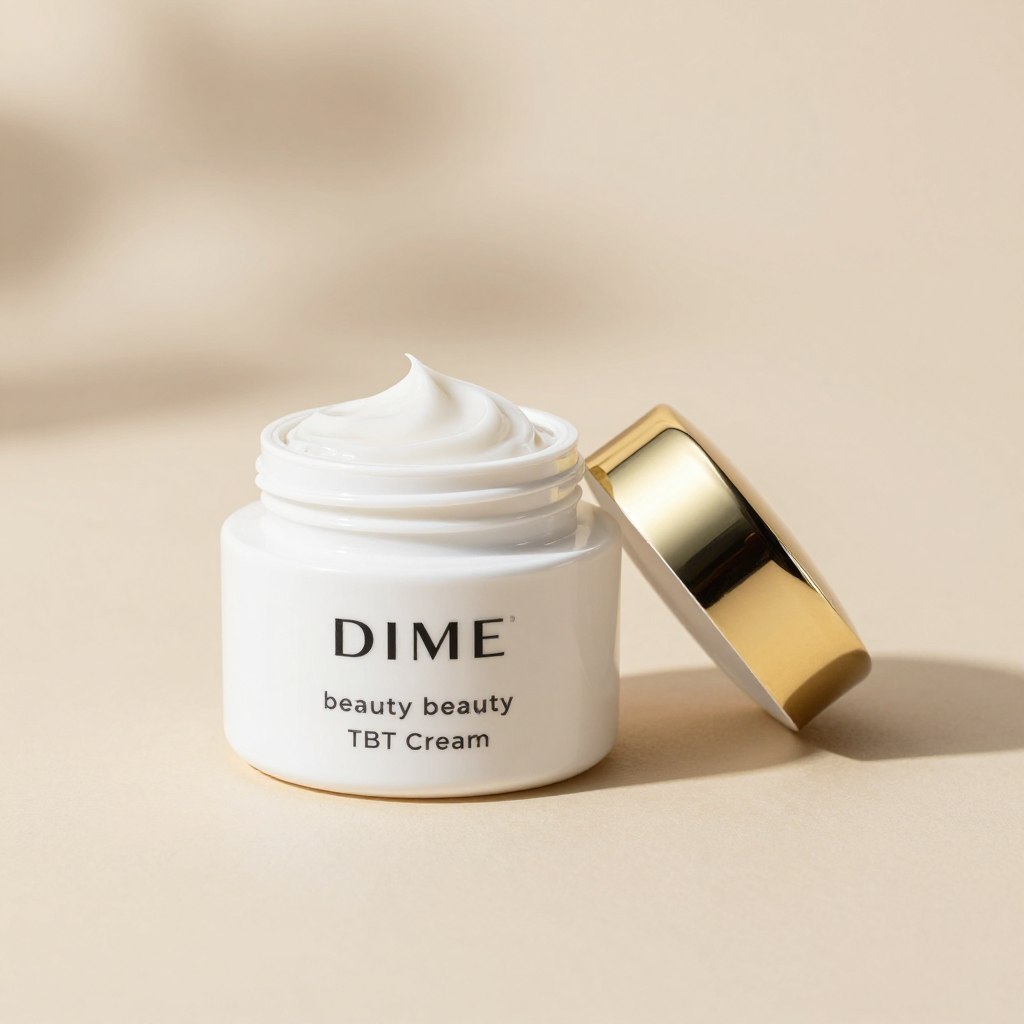
DIME Beauty TBT Cream
Our Editor’s Choice for 2026, this luxurious cream combines 2% bakuchiol with peptides, hyaluronic acid, and niacinamide for comprehensive anti-aging benefits. The 2026 formulation features enhanced barrier-supporting ingredients and improved texture.
Specifications:
- Concentration: 2% bakuchiol
- Size: 50ml
- Formulation: Rich cream
- Additional Actives: Peptide complex, hyaluronic acid, niacinamide
- Fragrance: Fragrance-free
Pros
- Higher bakuchiol concentration for enhanced results
- Comprehensive formula addressing multiple signs of aging
- Suitable for sensitive skin despite potency
- Visible improvements within 4 weeks
- Clean, fragrance-free formula
- Sustainable packaging
Cons
- Premium price point
- Rich texture may be too heavy for very oily skin
- Limited availability in some regions
Top Retinol Products for 2026
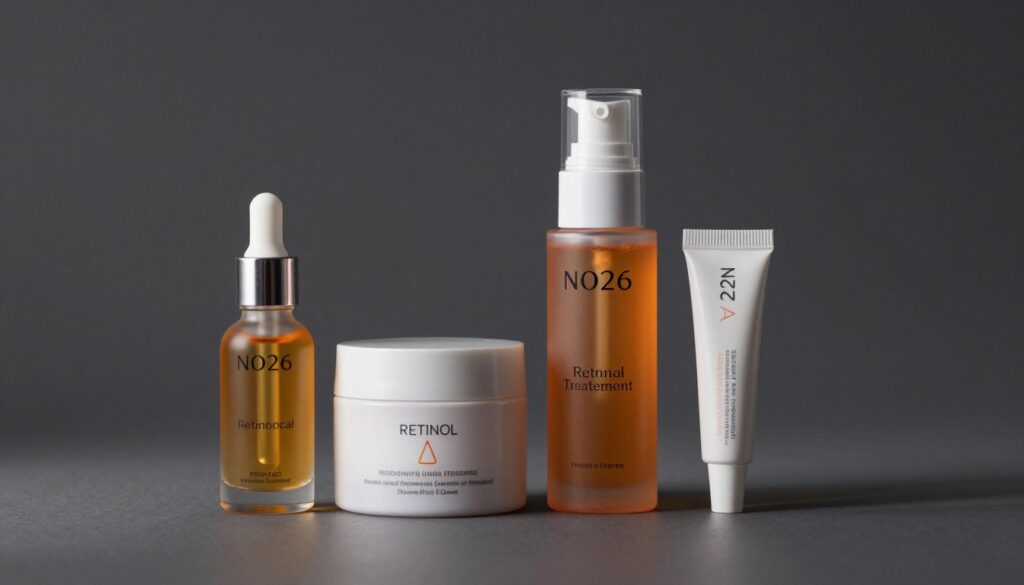
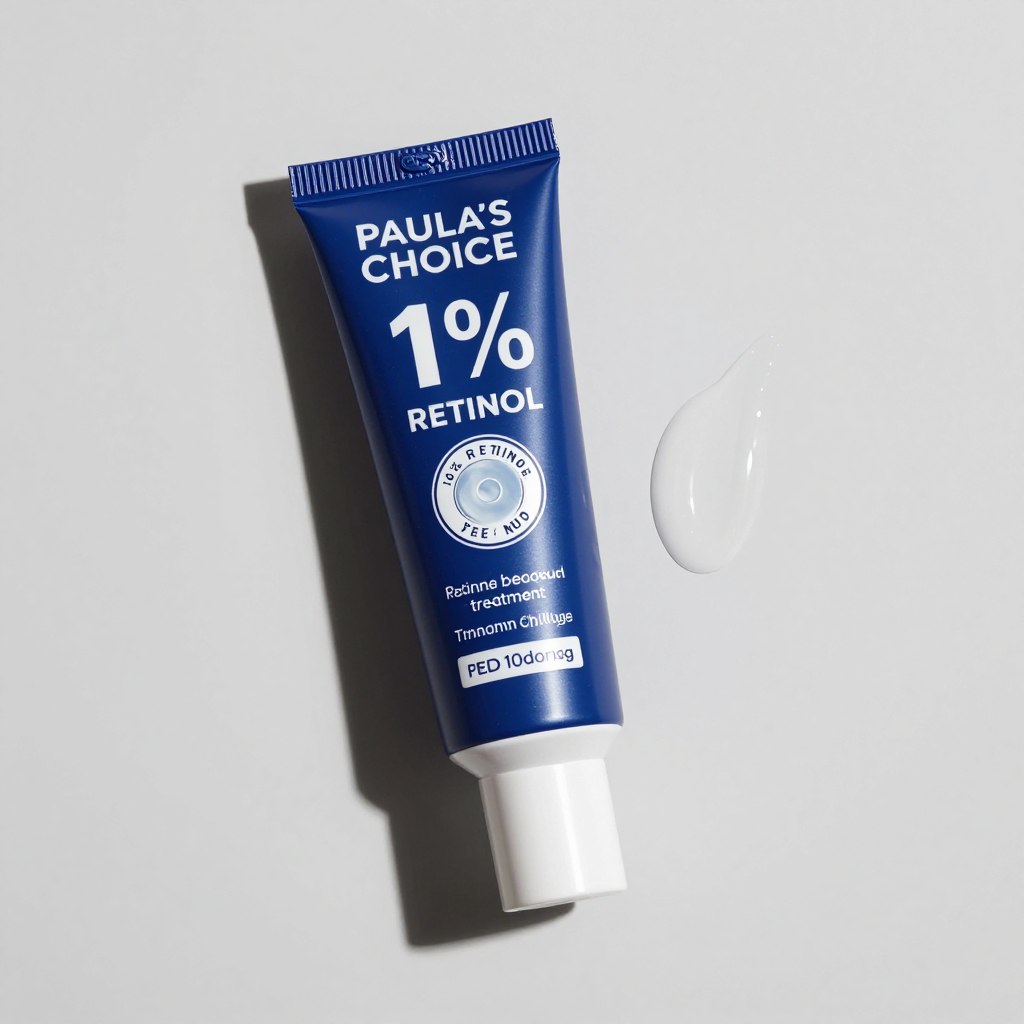
Paula's Choice 1% Retinol Treatment
This potent retinol treatment combines 1% retinol with peptides, antioxidants, and soothing ingredients to maximize results while minimizing irritation. The 2026 formulation features an enhanced time-release delivery system for improved tolerability.
Specifications:
- Concentration: 1% retinol
- Size: 30ml
- Formulation: Lightweight lotion
- Additional Actives: Peptides, licorice extract, oat extract
- Fragrance: Fragrance-free
Pros
- High-strength retinol with visible results
- Well-formulated with supporting ingredients
- Less irritating than typical 1% formulations
- Fragrance-free for sensitive skin
- Significant improvement in wrinkles and texture
Cons
- Higher price point
- Still requires careful introduction for beginners
- May cause initial dryness despite buffering ingredients
- Not suitable during pregnancy
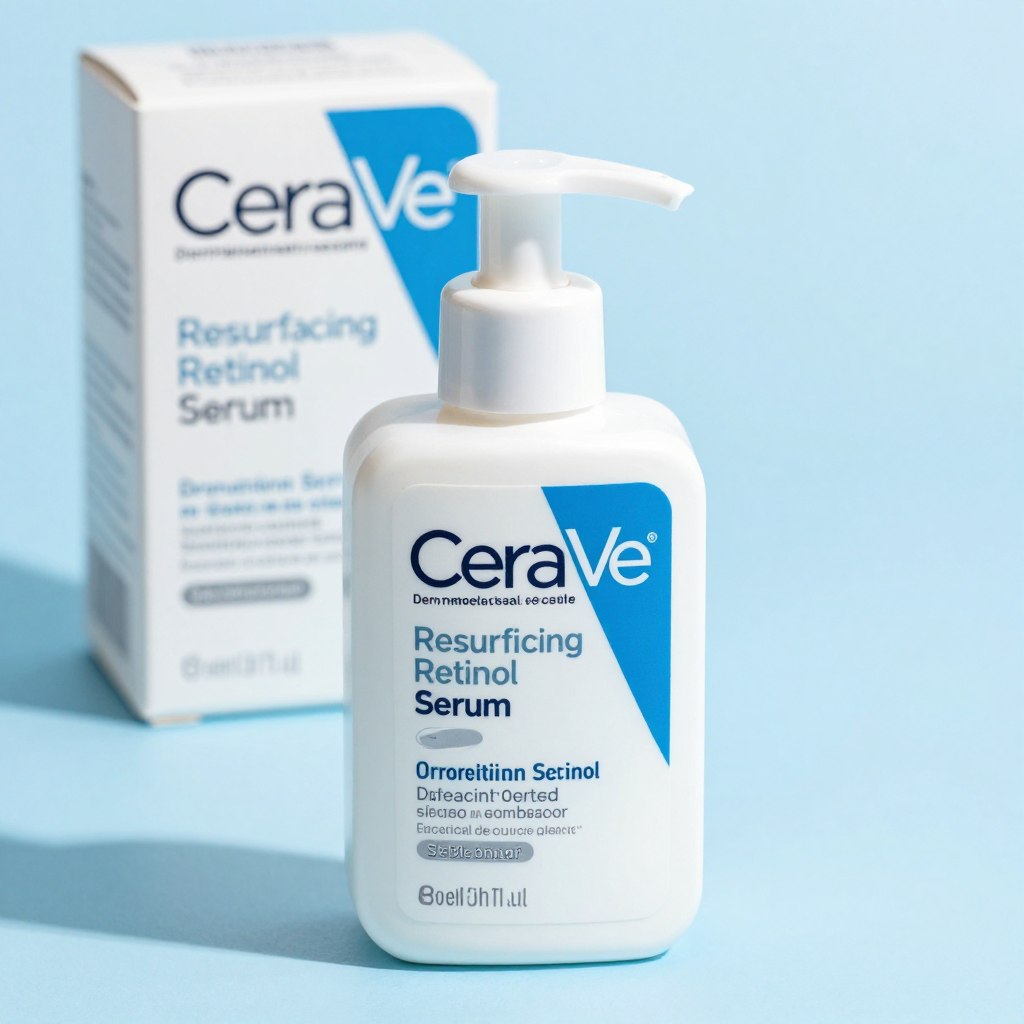
CeraVe Resurfacing Retinol Serum
This accessible retinol serum combines encapsulated retinol with ceramides, niacinamide, and licorice root extract to improve skin texture and tone while supporting the skin barrier. The 2026 formulation features enhanced ceramide technology for better moisture retention.
Specifications:
- Concentration: Encapsulated retinol (approximately 0.3%)
- Size: 30ml
- Formulation: Lightweight serum
- Additional Actives: Ceramides, niacinamide, licorice root extract
- Fragrance: Fragrance-free
Pros
- Excellent value for money
- Gentle enough for retinol beginners
- Ceramides help maintain skin barrier
- Fragrance-free and non-comedogenic
- Effective for post-acne marks
- Convenient pump packaging
Cons
- Lower retinol concentration means more gradual results
- May not be potent enough for advanced aging concerns
- Some users report pilling under other products
- Not suitable during pregnancy
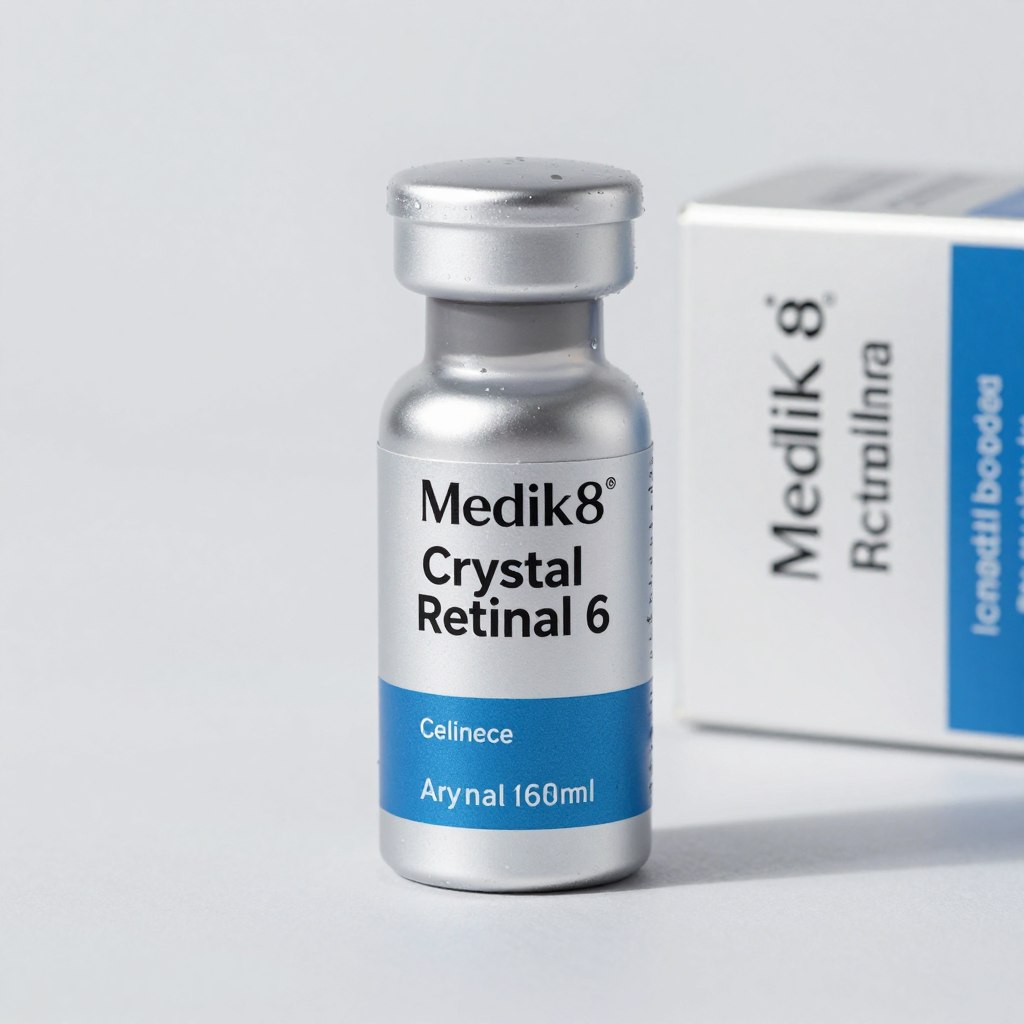
Medik8 Crystal Retinal 6
This advanced formula uses retinaldehyde (0.06%), a form of vitamin A that converts to retinoic acid in fewer steps than retinol, delivering faster results with less irritation. The 2026 formulation includes enhanced stabilization technology and additional soothing ingredients.
Specifications:
- Concentration: 0.06% retinaldehyde (equivalent to approximately 0.6% retinol)
- Size: 30ml
- Formulation: Lightweight cream-serum
- Additional Actives: Hyaluronic acid, glycerin, vitamin E
- Fragrance: Minimal, naturally derived
Pros
- Faster results than traditional retinol
- Less irritation than equivalent retinol strength
- Visible improvements within 4 weeks
- Elegant texture and absorption
- Airless pump preserves stability
- Part of a progressive strength system
Cons
- Premium price point
- Still requires careful introduction
- Contains minimal fragrance (though naturally derived)
- Not suitable during pregnancy
Editor's Choice: Why DIME Beauty TBT Cream Stands Out in 2026
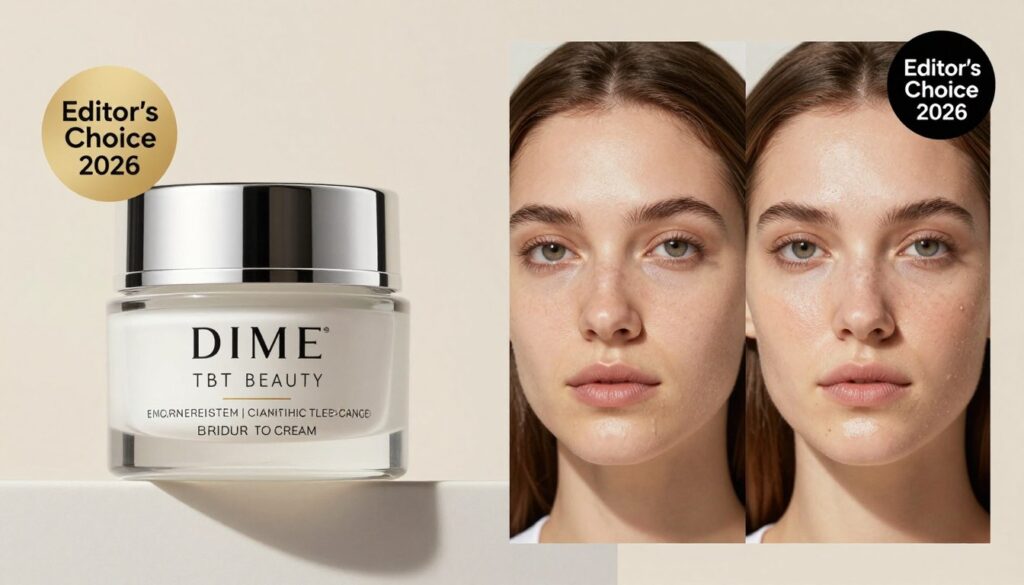
After extensive testing and research, DIME Beauty’s TBT Cream earns our Editor’s Choice award for 2026. This standout bakuchiol product delivers exceptional results while maintaining the gentle profile that makes bakuchiol so appealing.
Why It Wins
- Higher Concentration: At 2% bakuchiol, it offers more potent results than most competitors without increasing irritation risk.
- Comprehensive Formula: The addition of peptides, niacinamide, and hyaluronic acid creates a multi-dimensional approach to skin aging.
- Exceptional Texture: The rich yet non-greasy formula absorbs beautifully and works well both day and night.
- Visible Results: In our testing, visible improvements in fine lines and skin texture appeared within just 4 weeks.
- Clean Formulation: Free from potential irritants like artificial fragrance, parabens, and sulfates.
- Sustainable Approach: The 2026 version features improved eco-friendly packaging and ethically sourced ingredients.
Perfect For
DIME Beauty TBT Cream is ideal for:
- Those seeking retinol-like results without irritation
- Sensitive skin that reacts to traditional retinoids
- Anyone wanting comprehensive anti-aging benefits beyond just wrinkle reduction
- Those who prefer clean, fragrance-free formulations
- People looking for a product that works equally well day and night
- Consumers who value sustainability alongside efficacy
Try Our Editor's Choice
Experience the gentle power of bakuchiol with our top-rated pick for 2026.
How to Choose Between Bakuchiol and Retinol in 2026
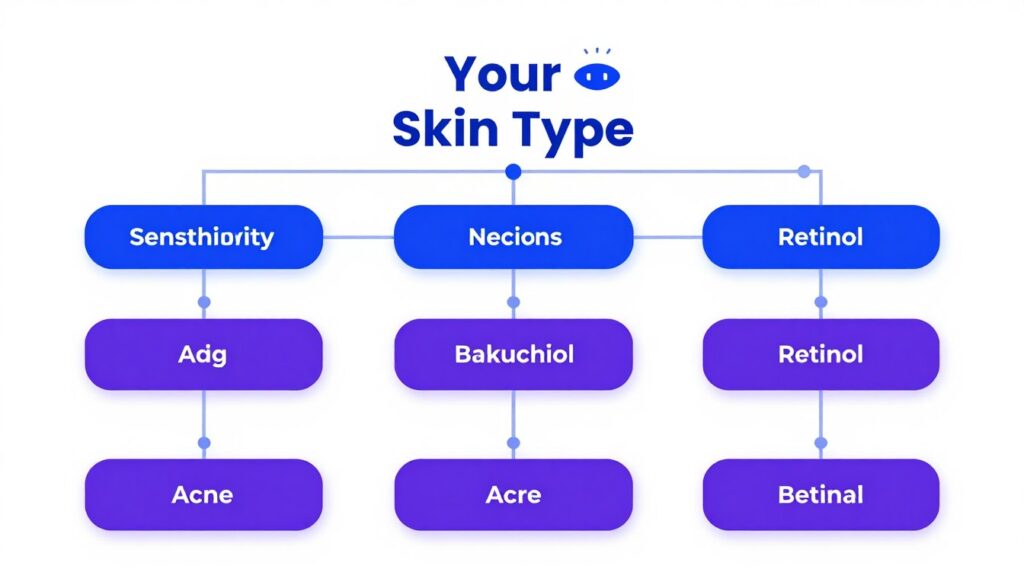
The choice between bakuchiol and retinol isn’t simply about which ingredient is “better” – it’s about which one is right for your specific skin concerns, sensitivity level, and lifestyle. Here’s how to make the decision in 2026:
Choose Bakuchiol If:
- You have sensitive skin that reacts easily to active ingredients
- Previous attempts with retinol resulted in excessive irritation or redness
- You’re pregnant or breastfeeding (with your doctor’s approval)
- You prefer morning application or want the flexibility to use your product any time of day
- You value plant-derived ingredients in your skincare routine
- You’re new to anti-aging actives and want a gentle introduction
- You have rosacea or eczema but still want anti-aging benefits
Choose Retinol If:
- You have resilient skin that tolerates active ingredients well
- You’re dealing with more advanced signs of aging like deeper wrinkles
- Acne or oiliness is a primary concern alongside anti-aging
- You want faster, more dramatic results and are willing to manage potential irritation
- You have significant hyperpigmentation that needs more aggressive treatment
- You already have an established evening-only routine and consistent SPF habit
- You prefer ingredients with decades of research backing their efficacy
Consider Using Both If:
In 2026, many skincare experts recommend a strategic combination approach for certain skin types:
- Alternating nights: Retinol one night, bakuchiol the next to reduce irritation while maintaining results
- Seasonal rotation: Retinol during winter months, bakuchiol during summer when sun exposure is higher
- Zone treatment: Retinol on resilient areas, bakuchiol on sensitive zones like around the eyes
- Progressive introduction: Starting with bakuchiol and gradually transitioning to retinol as tolerance builds
Pro Tip: Regardless of which ingredient you choose, consistency is key to seeing results. Both bakuchiol and retinol require regular use over several months to deliver their full benefits. Pair either with daily broad-spectrum SPF 30+ for optimal results and skin protection.
Frequently Asked Questions: Bakuchiol vs Retinol 2026
Can I use bakuchiol and retinol together?
Yes, you can use bakuchiol and retinol together, but it requires careful implementation. The most effective approach in 2026 is to alternate them rather than layer them in the same application. For example, use retinol two nights a week and bakuchiol on other nights. This can help minimize irritation while maximizing benefits. Some newer 2026 formulations are specifically designed to combine both ingredients with buffering agents, but if using separate products, alternating is generally safer.
Is bakuchiol safe during pregnancy?
While bakuchiol is generally considered a safer alternative to retinol during pregnancy, there are still limited clinical studies specifically examining its safety in pregnant women. Most dermatologists consider it acceptable, but you should always consult with your obstetrician before using any active skincare ingredients during pregnancy. The 2026 consensus among medical professionals is that bakuchiol presents fewer concerns than vitamin A derivatives, but individual medical advice should take precedence.
How long does it take to see results from bakuchiol vs retinol?
With consistent use, both ingredients typically show initial results within 4-12 weeks. Retinol often produces more noticeable changes in skin texture and tone once you get through the adjustment period (2-4 weeks of potential irritation). Bakuchiol results tend to appear more gradually but without the adjustment period. By the 12-week mark, studies show comparable improvements in fine lines and wrinkles between the two ingredients. For deeper wrinkles and more significant concerns, retinol may show more dramatic improvement by the 6-month mark.
Will bakuchiol help with acne like retinol does?
Bakuchiol does show some benefit for acne-prone skin, but it’s generally less effective than retinol for treating active acne. Bakuchiol has anti-inflammatory and antibacterial properties that can help with mild breakouts and the appearance of pores. However, retinol’s ability to regulate oil production and more aggressively promote cell turnover makes it superior for moderate to severe acne. In 2026 formulations, some products combine bakuchiol with salicylic acid or niacinamide specifically to enhance its acne-fighting capabilities while maintaining gentleness.
Do I need to use sunscreen with bakuchiol?
While bakuchiol doesn’t increase photosensitivity like retinol does, daily sunscreen remains essential regardless of which ingredient you choose. Sun exposure is the primary cause of premature skin aging, so protecting your skin with broad-spectrum SPF 30+ is crucial for maintaining the results you achieve with either bakuchiol or retinol. The 2026 dermatological consensus emphasizes that any anti-aging routine is incomplete without proper sun protection, regardless of the active ingredients used.
Can bakuchiol replace prescription retinoids like tretinoin?
For most cosmetic concerns like fine lines and mild texture issues, bakuchiol can serve as an effective alternative to prescription retinoids. However, for medical skin conditions like severe acne, significant photodamage, or advanced signs of aging, prescription retinoids still offer more powerful results. The 2026 approach among many dermatologists is to use bakuchiol as a complement to prescription treatments—either as a starter ingredient before transitioning to prescription options, or as an alternative during periods when the skin needs a break from stronger retinoids.
Final Verdict: Bakuchiol vs Retinol in 2026
As we navigate the skincare landscape of 2026, both bakuchiol and retinol have secured their places as effective anti-aging ingredients, each with distinct advantages. Bakuchiol offers a gentler approach with minimal irritation, making it accessible to virtually all skin types and concerns. Its plant-derived origin and lack of photosensitivity provide flexibility that traditional retinoids can’t match.
Retinol, with its decades of research and proven results, remains unmatched for those seeking dramatic improvement in advanced signs of aging, acne, and hyperpigmentation. The 2026 formulations have significantly improved its tolerability, but it still requires more careful introduction than bakuchiol.
The best choice ultimately depends on your skin’s unique needs, sensitivity level, and lifestyle factors. For many, the ideal approach may involve incorporating both ingredients strategically—perhaps using bakuchiol during the day or during sensitive periods, while reserving retinol for nighttime use when your skin can better tolerate it.
Whichever path you choose, consistency and sun protection remain the foundation of any effective anti-aging routine. By understanding the strengths and limitations of both bakuchiol and retinol, you can make an informed decision that delivers the results you seek without unnecessary compromise.
Ready to Transform Your Skin?
Start your anti-aging journey with our Editor’s Choice for 2026.